

Fashion brands are fighting for attention in one of the most visually saturated markets on earth. Every scroll reveals another campaign, another drop, another influencer holding another product. Yet some brands cut through effortlessly, not because they spent more, but because they told better stories. Cinematic storytelling, when built on a clear strategic framework, transforms passive scrollers into emotionally invested audiences. With influencer marketing delivering £6.50 per £1 spent, the opportunity is real. This article maps out the frameworks, benchmarks, and tactics that turn narrative into measurable growth.
Table of Contents
- Establish your narrative: integrated storytelling frameworks
- Amplify reach: influencer marketing and media synchronisation
- Elevate engagement: omnichannel marketing and conversion tactics
- Adapt for 2026: human connection and slow advertising
- Summary comparison: which fashion marketing strategies work best?
- Take your storytelling further with expert film production and creative direction
- Frequently asked questions
Key Takeaways
| Point | Details |
|---|---|
| Integrated storytelling | Coordinated narrative and campaign planning elevate brand engagement and authenticity. |
| Influencer ROI benchmarks | Micro and nano influencers offer superior return compared to mega influencers. |
| Omnichannel advantage | Blending online and in-store tactics boosts conversion rates and customer lifetime value. |
| Human-centric messaging | Prioritising emotional connection and authenticity leads to sustained brand trust in 2026. |
Establish your narrative: integrated storytelling frameworks
Integrated storytelling is not simply running the same creative across multiple platforms. It means building a single, coherent narrative that unfolds across channels, each touchpoint deepening the audience's relationship with the story. For fashion brands, this is the difference between a campaign and a cultural moment.
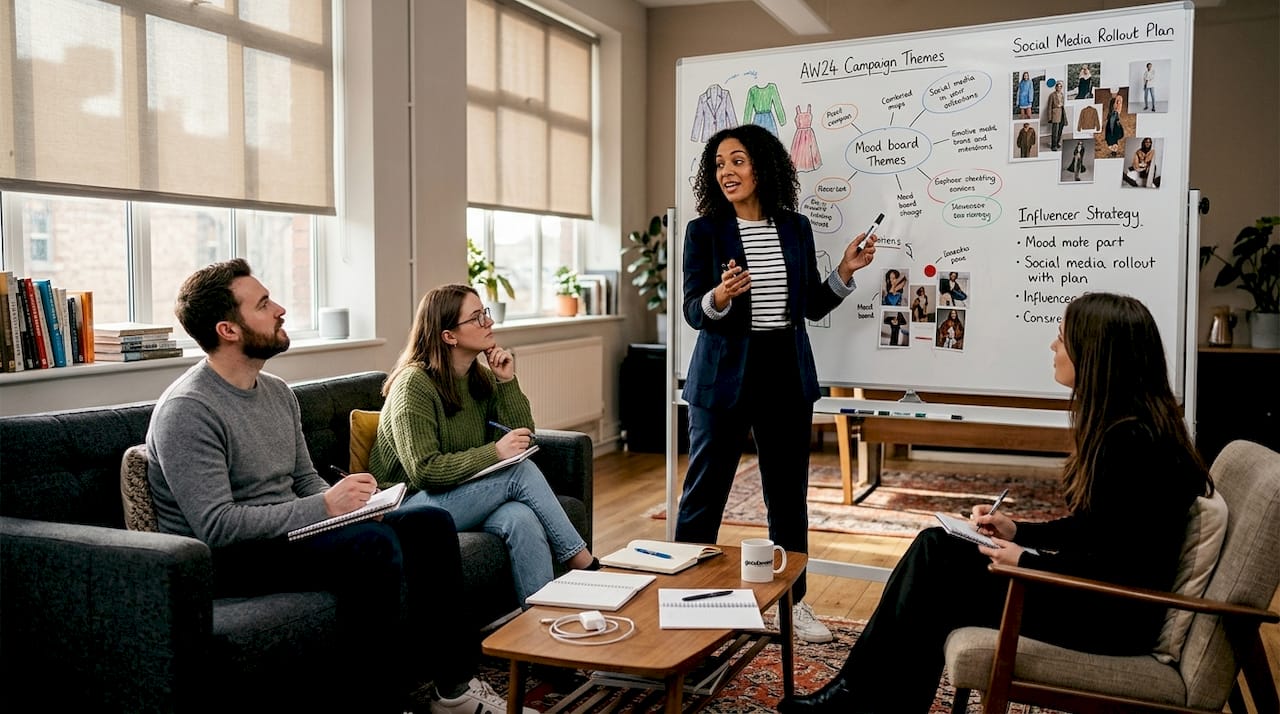
The Gucci campaign breakdown for The Tiger is a masterclass in this approach. Gucci used pre-launch priming to build anticipation before the film even dropped, then orchestrated a cinematic premiere, owned media rollout, shoppable links, earned press coverage, and A-list influencer extensions, all with minimal paid spend. The narrative did the heavy lifting.
What makes this model so effective is narrative continuity. Each channel does not repeat the message; it extends it. A teaser on Instagram creates curiosity. The film delivers emotional payoff. A behind-the-scenes piece on YouTube adds depth. Shoppable links convert the feeling into action.
Here is what a well-structured integrated campaign typically includes:
- Pre-launch priming: Teasers, cryptic visuals, and cultural seeding to build anticipation
- Cinematic hero content: A film or visual piece that anchors the entire narrative
- Owned media rollout: Email, website, and social channels amplifying the story
- Earned media triggers: Press-worthy moments that generate organic coverage
- Shoppable conversion layer: Direct links from content to product
- Influencer extensions: Voices that carry the story into new communities
The distinction between owned and earned media matters enormously here. Owned media gives you control; earned media gives you credibility. The most effective cinematic campaign frameworks engineer both simultaneously, designing content that is compelling enough to be shared and covered without paying for placement.
"The brands winning in 2026 are not the ones with the biggest budgets. They are the ones with the clearest story and the discipline to tell it consistently across every touchpoint."
Pro Tip: Use archetype storytelling to prime your audience before launch. Whether your brand embodies the Rebel, the Creator, or the Lover archetype, anchoring your campaign in a recognisable human archetype creates instant emotional resonance and makes your narrative far easier to extend across channels.
Amplify reach: influencer marketing and media synchronisation
Once your narrative is set, coordination across voices can multiply its reach. But not all influencer voices are equal, and the data tells a story that surprises most brand leaders.
Influencer ROI by tier breaks down as follows: nano influencers achieve 6.8x return, micro influencers 5.2x, macro 3.8x, and mega influencers just 2.9x. The biggest names deliver the widest reach, but the smallest voices deliver the deepest trust.
| Influencer tier | Follower range | Average ROI | Engagement rate |
|---|---|---|---|
| Nano | 1K to 10K | 6.8x | 8.7% |
| Micro | 10K to 100K | 5.2x | 5.6% |
| Macro | 100K to 1M | 3.8x | 2.4% |
| Mega | 1M+ | 2.9x | 1.1% |
The strategic implication is clear. For niche fashion communities, a cohort of ten nano influencers will almost always outperform a single mega name. Their audiences are smaller but far more engaged, and their recommendations carry genuine social proof.
Media synchronisation is what separates a scatter-gun influencer strategy from a coordinated campaign. This means briefing influencers to post within the same 48-hour window as your hero content launch, aligning their messaging with your narrative arc, and ensuring their content links back to your owned channels. The result is a coordinated spike in attention rather than a slow trickle.
Key tactics for effective synchronisation:
- Staggered posting schedules: Teasers from nano influencers before launch, macro voices on launch day
- Unified creative direction: Consistent visual language and narrative cues across all influencer content
- Cross-channel amplification: Resharing influencer content on owned channels to extend reach
- Performance tracking: Monitoring engagement and fashion influencer ROI in real time to optimise mid-campaign
Pro Tip: Brief your influencers on the feeling you want to evoke, not just the product features. Influencers who understand the emotional core of your campaign create content that feels authentic rather than scripted, and that authenticity is precisely what drives higher engagement rates.
Elevate engagement: omnichannel marketing and conversion tactics
With amplified audience reach, maximising engagement across channels seals the narrative's impact. Omnichannel is not a buzzword; it is a measurable growth lever. Brands that execute it well see omnichannel LTV boost 30% in customer lifetime value, alongside inventory turnover of up to 12x and online conversion rates of 4 to 6 percent compared to the industry average of 2.1 to 3 percent.
| Metric | Standard retail | Omnichannel approach |
|---|---|---|
| Online conversion rate | 2.1 to 3% | 4 to 6% |
| Inventory turnover | 4 to 6x | Up to 12x |
| Customer lifetime value | Baseline | Up to 30% higher |
| Return rates | Higher | Significantly reduced |
Entertainment-driven campaigns are proving particularly effective at bridging content and conversion. The Gap x KATSEYE viral video generated 21 million views, while Rare Beauty's collaboration with Tajín delivered £7.8 million in media impact value. These are not vanity metrics; they translate directly into brand equity and purchase intent.
The mechanism is straightforward. When a campaign creates genuine entertainment or emotional resonance, audiences are far more receptive to conversion prompts. Shoppable links embedded within campaign films, Instagram Stories, and influencer content remove friction from the path to purchase.
Practical conversion tactics to layer into your campaigns:
- Shoppable campaign films: Embed product links directly within hero content
- Retargeting sequences: Follow up engaged viewers with conversion-focused creative
- In-store and online alignment: Ensure campaign messaging is consistent across physical and digital touchpoints
- Limited-time drops: Use campaign momentum to drive urgency around product releases
Humour and entertainment work brilliantly in fashion marketing, but only when they align with your brand voice. A luxury house attempting viral comedy risks undermining its positioning. A streetwear brand that takes itself too seriously misses its audience entirely. The omnichannel marketing strategies that perform best are those where the entertainment layer feels like a natural extension of the brand's character, not a departure from it.
Pro Tip: Use shoppable links not just in paid placements but within your organic campaign content. A film posted on your own channels can carry direct product links, turning every view into a potential conversion without any additional media spend.
Adapt for 2026: human connection and slow advertising
Finally, to thrive in 2026, adaptability and real connection are paramount. The most significant strategic shift happening right now is the move away from AI-generated spectacle towards what industry leaders are calling slow advertising, campaigns built on genuine human emotion, cultural relevance, and patient storytelling.
"The brands orchestrating 'story as operating system' are prioritising human-centric over AI-driven approaches, balancing Gen Z acquisition with the spending power of older consumers."
This is a direct response to audience fatigue. Consumers, particularly in fashion, have become acutely sensitive to content that feels manufactured or algorithmically optimised. The backlash to AI-generated imagery in fashion campaigns has been swift and public, with audiences calling out inauthenticity in real time.
The 2026 strategic trends point clearly towards brands that invest in real craft, real moments, and real human stories. This does not mean abandoning technology; it means using it in service of authentic storytelling rather than as a substitute for it.
Knowing when to deploy different emotional registers is a genuine strategic skill:
- Use humour when your brand has cultural permission and the moment is genuinely playful
- Use emotion when you are building long-term brand equity or launching a flagship campaign
- Use cultural moments when your brand has an authentic connection to the conversation
- Use restraint when the product or craft speaks for itself
- Avoid AI spectacle when your audience values authenticity above novelty
The brands winning right now are not chasing every trend. They are building a consistent human-centric storytelling approaches that compounds over time, creating audiences who feel genuinely connected to the brand's world.
Pro Tip: Authentic moments do not need to be expensive. A candid film of your design process, an honest conversation with your founder, or a real customer story can outperform a heavily produced campaign if it carries genuine emotional truth.
Summary comparison: which fashion marketing strategies work best?
Having reviewed specific approaches, compare them and select the right fit for your brand's objectives. With luxury email open rates at 32.5%, TikTok engagement averaging 4.2%, and Instagram remaining the primary platform for 72% of fashion brands, the channel landscape is diverse but navigable.
| Strategy | Best for | Strengths | Considerations |
|---|---|---|---|
| Integrated cinematic storytelling | Luxury, heritage, and premium brands | Deep emotional engagement, earned media, brand equity | Requires strong creative direction and planning |
| Nano and micro influencer campaigns | DTC, niche, and emerging brands | High ROI, authentic reach, community trust | Requires careful curation and briefing |
| Omnichannel conversion campaigns | Mid-market and growth-stage brands | Measurable ROI, LTV improvement, reduced returns | Demands consistent cross-channel execution |
| Slow advertising and human-centric content | All brand tiers | Long-term equity, audience loyalty, cultural relevance | Requires patience and creative confidence |
| Entertainment-driven viral campaigns | Streetwear, youth, and accessible brands | Rapid reach, cultural conversation, social proof | Risk of misalignment with brand voice |
For startups, the priority should be nano influencer campaigns and authentic founder-led storytelling. Budget is limited, but trust is everything. For luxury brands, integrated cinematic storytelling and slow advertising deliver the depth and prestige that the audience expects. For direct-to-consumer brands, omnichannel conversion tactics paired with micro influencer amplification offer the clearest path to measurable growth.
The strategic mix for fashion brands is rarely a single approach. The most effective campaigns layer narrative, amplification, and conversion into a coherent system, each element reinforcing the others.
| Brand type | Recommended primary strategy | Secondary layer |
|---|---|---|
| Startup | Nano influencer and founder storytelling | Organic social and earned media |
| Luxury | Cinematic storytelling and slow advertising | A-list influencer extensions |
| DTC and growth-stage | Omnichannel conversion and micro influencers | Shoppable content and retargeting |
Take your storytelling further with expert film production and creative direction
The frameworks in this article are only as powerful as the creative work that brings them to life. Strategy without craft is a plan without a film. Craft without strategy is a beautiful film that nobody sees.
At Good Over Evil, we sit at the intersection of film production and strategy, building campaigns that are visually distinctive, emotionally sharp, and commercially intentional. From cinematic hero films to full campaign orchestration, our creative agency services are built specifically for fashion, music, and design-focused brands that want to lead rather than follow. If you are ready to build a campaign that earns attention and drives results, request a consultation and let's talk about what your brand's story could become.
Frequently asked questions
How much should a fashion brand spend on marketing?
Fashion brands typically allocate 10% of revenue to marketing, with influencer campaigns consistently delivering some of the strongest returns within that budget.
Which influencer tier delivers the best ROI in fashion?
Nano influencers achieve 6.8x ROI, making them the highest-performing tier, followed by micro influencers at 5.2x, both significantly outperforming mega influencers at 2.9x.
What is the benchmark for online conversion rates in fashion retail?
The industry average sits at 2.1 to 3%, but omnichannel conversion rates can reach 4 to 6% when content, channels, and conversion layers are properly aligned.
How should brands balance AI-driven and human storytelling in 2026?
Leading brands are prioritising human-centric storytelling over AI-generated spectacle, using technology to support authentic narratives rather than replace the genuine emotional craft that audiences respond to.