

Most brands chase visibility and short-term spikes, yet 95% of consumer decisions happen subconsciously. This disconnect explains why many growth efforts plateau despite increased spend. Effective brand growth strategy transcends surface-level awareness, weaving together neuroscience-backed storytelling and performance-led marketing to build lasting equity. For marketing professionals in fashion, music, and design sectors, understanding how emotional resonance and data personalisation intersect unlocks sustainable growth. This guide demystifies brand growth strategy, revealing how cinematic storytelling combined with measurable tactics drives both immediate impact and compounding returns.
Table of Contents
- Key takeaways
- Understanding brand growth strategy and its core principles
- Performance-led marketing: balancing short-term impact with long-term growth
- Tailoring brand growth strategies to the fashion, music, and design sectors
- Applying cinematic storytelling and data personalisation for sustained brand growth
- Connect with experts to drive your brand growth
- Frequently asked questions
Key Takeaways
| Point | Details |
|---|---|
| Subconscious decisions dominate | Most consumer choices are driven by emotion and storytelling rather than explicit rational analysis. |
| Neurobranding foundations | Neurobranding explains how emotional immersion, neural coupling and subconscious priming shape brand perception. |
| Multisensory brand experiences | Design multisensory brand experiences that engage sight, sound and touch to build lasting recognition and affinity. |
| Personalisation boosts revenue | AI driven segments enable targeted messaging that delivers higher revenue and stronger engagement. |
Understanding brand growth strategy and its core principles
Brand growth strategy is a systematic plan to expand brand equity, reach, and revenue sustainably over time. It goes beyond transactional campaigns, focusing on building emotional connections that influence purchasing behaviour at a subconscious level. This approach recognises that consumers rarely make rational decisions. Instead, they respond to sensory cues, narrative patterns, and emotional triggers embedded in brand experiences.
Neurobranding provides the scientific foundation for effective brand growth. Research shows 95% of consumer decisions occur subconsciously, driven by three core mechanisms: emotional immersion, neural coupling, and subconscious priming. Emotional immersion happens when sensory experiences create heightened engagement, making brand moments memorable. Neural coupling occurs when storytelling synchronises the audience's brain activity with the narrative, fostering empathy and connection. Subconscious priming plants associative cues that influence future choices without conscious awareness.
Consider how luxury fashion brands use sensory repetition to embed brand identity. The consistent texture of packaging, signature scent in stores, and visual motifs across campaigns create layered associations. These elements work together to prime consumers, making the brand feel familiar and desirable even before conscious evaluation begins. This is film production and creative direction at its most strategic, where every visual and auditory choice reinforces brand positioning.
"Neurobranding mechanics drive 95% of subconscious decisions through immersion, neural coupling, and subconscious priming, making emotional resonance the foundation of effective brand messaging."
Key neurobranding principles for brand growth include:
- Design multisensory brand experiences that engage sight, sound, and touch simultaneously
- Craft narrative arcs that mirror human emotional journeys, creating neural synchronisation
- Use consistent visual and auditory signatures to build subconscious brand recognition
- Prioritise emotional payoff over explicit calls to action in storytelling
Pro Tip: Focus on emotional resonance over overt product pitching. Audiences engage more deeply with stories that reflect their values and aspirations, building brand affinity that translates to long-term loyalty and advocacy.
Performance-led marketing: balancing short-term impact with long-term growth
Performance-led marketing centres on measurable outcomes, using data to optimise campaigns in real time. Unlike traditional brand-building efforts that rely on delayed attribution, performance marketing tracks immediate responses such as clicks, conversions, and engagement rates. This approach delivers short-term spikes whilst feeding insights that compound into long-term brand equity when integrated with storytelling.
The power of data-driven personalisation becomes clear in recent case studies. AI-driven segments yield 6x revenue and 75% open rates, demonstrating how targeted messaging outperforms generic broadcasts. These results stem from segmenting audiences based on behavioural signals, then tailoring content to match specific preferences and consumption patterns. For fashion, music, and design brands, this means delivering the right narrative to the right segment at the optimal moment.
Deploying data-driven personalisation campaigns involves these steps:
- Collect behavioural data across touchpoints including website visits, social engagement, and purchase history
- Segment audiences using AI algorithms that identify patterns in preferences and consumption habits
- Develop tailored content variations that speak to each segment's unique motivations and aesthetic sensibilities
- Test messaging variants in real time, measuring engagement and conversion metrics to refine targeting
- Feed performance insights back into creative development, continuously optimising narrative and visual elements
| Metric | Traditional Campaigns | AI-Driven Personalisation |
|---|---|---|
| Revenue multiplier | 1x baseline | 6x baseline |
| Email open rates | 20-25% | 75% |
| Conversion rates | 2-3% | 8-12% |
| Customer lifetime value | Standard | 3x higher |
Short-term spikes from performance marketing services complement long-term brand equity growth when approached strategically. Immediate conversions validate messaging effectiveness, whilst repeated positive interactions build emotional associations that strengthen brand preference over time. The key lies in balancing direct response tactics with narrative depth, ensuring campaigns drive action without sacrificing the emotional resonance that fuels lasting loyalty.
Pro Tip: Integrate performance data with storytelling for continuous optimisation. Use engagement metrics to identify which narrative elements resonate most, then amplify those themes across broader brand communications to deepen emotional connections whilst maintaining measurable impact.
Tailoring brand growth strategies to the fashion, music, and design sectors
Each creative sector demands distinct storytelling approaches based on audience values and consumption behaviours. Luxury fashion audiences prioritise exclusivity and craftsmanship, responding to product-focused narratives that emphasise detail and heritage. Mass-market music consumers seek relatability and aspiration, engaging more with celebrity-driven content that reflects cultural trends. Design-focused audiences value innovation and aesthetic coherence, favouring minimalist storytelling that highlights form and function.
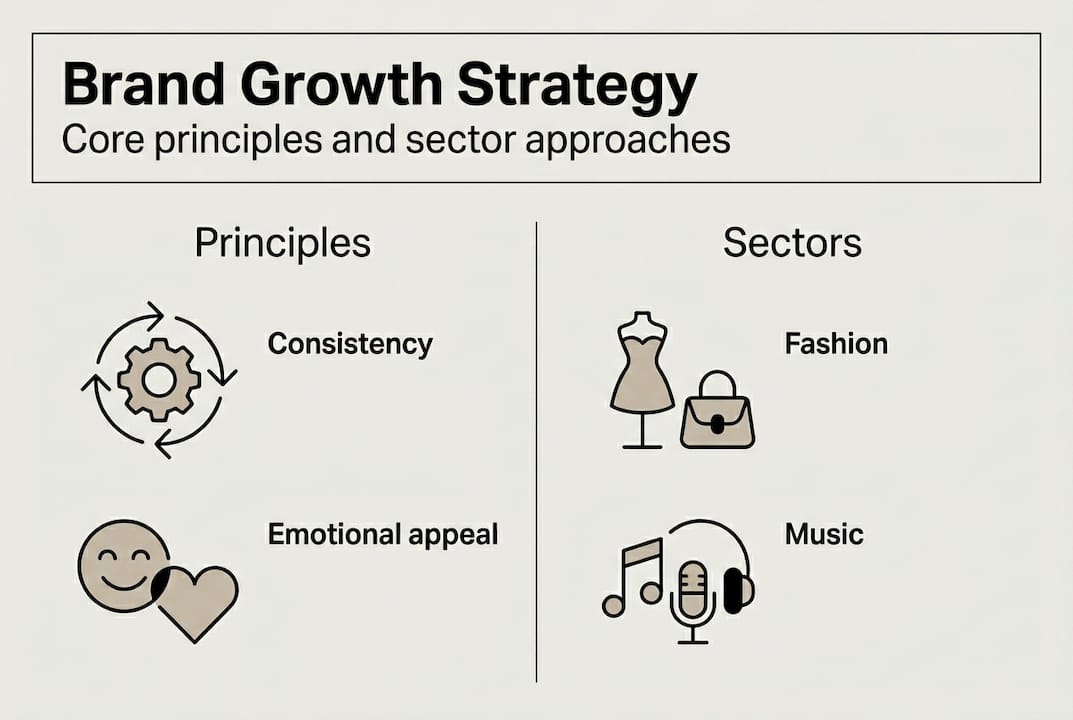
Research reveals luxury brands favour product-focused stories without influencers, whilst mass-market sectors perform better with celebrities and rich backdrops. This distinction stems from differing audience expectations. Luxury consumers view overt celebrity endorsements as diluting brand exclusivity, preferring narratives that let the product speak for itself. Conversely, mass-market audiences use celebrity associations as social proof, validating their purchase decisions through aspirational identification.
Tailored storytelling techniques by sector include:
- Luxury fashion: cinematic close-ups on craftsmanship details, minimal dialogue, ambient soundscapes that evoke sophistication
- Mass-market music: dynamic editing with celebrity features, trending audio tracks, vibrant backdrops that signal cultural relevance
- Design: clean compositions emphasising negative space, process-focused narratives showing creation, monochromatic palettes highlighting form
| Sector | Influencer Use | Imagery Style | Engagement Driver |
|---|---|---|---|
| Luxury fashion | Minimal | Product close-ups | Exclusivity cues |
| Mass-market music | High | Celebrity features | Social proof |
| Design | Moderate | Process-focused | Innovation signals |
Multi-image posts without URLs generate higher engagement on Instagram across all sectors, suggesting audiences prefer immersive visual narratives over transactional content. This finding supports the cinematic storytelling approach, where sequential images build narrative tension and emotional payoff without interrupting the viewing experience with explicit calls to action.
Adjusting tactics to align with peer-reviewed data insights means testing sector-specific hypotheses against your audience's actual behaviour. Whilst luxury brands generally avoid influencers, emerging luxury labels targeting younger demographics might find strategic micro-influencer partnerships effective. The principle remains consistent: let data validate creative decisions whilst maintaining the emotional authenticity that drives creative direction agency services effectiveness.
Applying cinematic storytelling and data personalisation for sustained brand growth
Integrating cinematic storytelling with AI-powered personalisation creates immersive, targeted brand experiences that nurture growth over time. This synthesis addresses both the emotional and rational dimensions of consumer decision-making, building subconscious brand preference whilst delivering measurable performance outcomes. The approach requires collaboration between creative and data teams, establishing feedback loops that continuously refine both narrative and targeting.
Implementing this integrated strategy involves these steps:
- Develop core cinematic story arcs that embody brand values and emotional positioning, creating a narrative foundation that resonates across segments
- Map audience segments to specific story variations, identifying which emotional themes and visual styles align with each group's preferences
- Deploy AI-driven personalisation to deliver tailored story versions across channels, ensuring each segment encounters narratives optimised for their consumption patterns
- Monitor emotional engagement metrics alongside performance KPIs, tracking both immediate responses and longer-term sentiment shifts
- Establish regular creative-data review cycles, using insights to refine story elements and targeting parameters for continuous improvement
The power of combining cinematic storytelling with AI personalisation becomes evident in campaigns that achieve both artistic impact and commercial results. A fashion brand might create a hero film showcasing craftsmanship, then generate personalised edits highlighting specific products based on individual browsing history. Music brands could develop narrative-driven content featuring emerging artists, personalising distribution to fans of similar genres identified through streaming data.

Pro Tip: Monitor emotional engagement metrics in addition to performance KPIs for holistic growth analysis. Track sentiment indicators such as comment tone, share context, and dwell time alongside conversion rates to understand whether campaigns build lasting brand affinity or merely drive transactional spikes.
Continuous feedback loops between creative and data teams enable agility in response to shifting audience preferences. Creative teams gain visibility into which narrative elements drive engagement, informing future storytelling choices. Data teams access richer context about why certain segments respond differently, refining targeting algorithms to account for emotional and aesthetic preferences beyond demographic factors.
Formats and channels that best support this integrated approach include:
- Instagram Stories and Reels for serialised narrative delivery with segment-specific variations
- YouTube for longer-form cinematic content with personalised follow-up sequences
- Email campaigns combining emotive visuals with data-driven product recommendations
- Programmatic video advertising delivering tailored story edits based on browsing behaviour
The key lies in maintaining narrative coherence across personalised variations. Each segment should experience a story that feels authentic and emotionally resonant, not a generic template with swapped elements. This requires creative teams to develop modular story frameworks that accommodate personalisation without sacrificing artistic integrity, ensuring every viewer encounters a compelling brand experience tailored to their unique preferences.
For marketing professionals seeking to implement these strategies, partnering with specialists who understand both cinematic craft and performance optimisation accelerates results. Consultation services that bridge creative direction and data strategy provide the integrated expertise necessary to execute sophisticated brand growth campaigns effectively.
Connect with experts to drive your brand growth
Transforming brand growth strategy from theory to practice requires expertise in both cinematic storytelling and performance marketing integration. Good Over Evil specialises in creating campaign films and brand content that combine emotional depth with commercial intent, delivering work that feels elevated whilst driving measurable growth outcomes.
Our creative direction and film production services help fashion, music, and design brands craft narratives that resonate subconsciously whilst performance marketing capabilities ensure those stories reach the right audiences at optimal moments. This integrated approach builds brand equity through immersive storytelling whilst delivering the data-driven optimisation that sustains growth over time.
Explore our agency services to see how we combine film, culture, and strategy for brands seeking distinctive creative work with commercial impact. Ready to elevate your brand growth strategy? Request a consultation to discuss how tailored cinematic storytelling and performance-led marketing can accelerate your growth trajectory.
Frequently asked questions
What is brand growth strategy?
Brand growth strategy is a systematic plan to expand brand equity, reach, and revenue sustainably over time. It combines emotional storytelling with data-driven tactics to build subconscious consumer preference whilst delivering measurable performance outcomes. Effective strategies recognise that lasting growth stems from deep audience connections, not just transactional campaigns.
How does cinematic storytelling enhance brand growth?
Cinematic storytelling creates emotional immersion and neural coupling, driving the subconscious decisions that account for 95% of consumer behaviour. It builds memorable, relatable brand narratives that encourage loyalty by synchronising audience brain activity with the story's emotional arc. This approach transforms passive viewers into emotionally invested brand advocates who choose your brand instinctively.
What is the difference between performance-led marketing and traditional advertising?
Performance marketing uses data and real-time feedback for continuous optimisation, tracking immediate responses such as conversions and engagement rates. Traditional advertising often emphasises reach and frequency without direct measurement of return on investment or attribution to specific actions. Performance approaches deliver both short-term spikes and insights that compound into long-term growth when integrated with brand storytelling.
Why is tailoring a brand growth strategy important for creative sectors?
Tailoring ensures messaging resonates with unique audience values and consumption habits specific to fashion, music, and design communities. Luxury audiences respond to product-focused narratives emphasising exclusivity, whilst mass-market segments engage more with celebrity-driven content signalling cultural relevance. Sector-specific strategies improve engagement rates and drive more authentic brand growth outcomes by aligning storytelling with audience expectations.
How can I measure the success of a brand growth strategy?
Track metrics such as customer lifetime value, brand equity scores, and engagement rates alongside immediate conversion data. Combine short-term sales spikes with long-term brand loyalty indicators including repeat purchase rates, sentiment analysis, and share of voice for a comprehensive view. Effective measurement balances performance KPIs with emotional engagement metrics to understand whether campaigns build lasting affinity or merely drive transactional responses.